


Table of contents
What's a customer? Definition
A customer is a person or company who buys a product or service from a company.
Customers are important, because they’re the ones who generate the company’s income. Without customers, most companies cannot continue to exist.
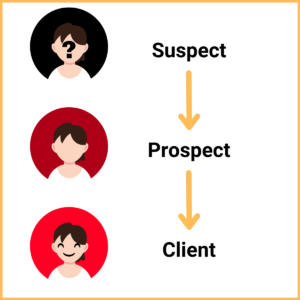
Before becoming a customer, a contact goes through several stages: lead, suspect and prospect. These stages provide information about the person’s potential to become a customer.
During each phase of the potential customer’s familiarization with the company, he can evolve in the eyes of the company, so that it approaches him at the ideal moment.
Customer types
Companies compete with each other to attract as many customers as possible in order to generate maximum revenue. They try to attract customers by offering different and exclusive experiences, advertising, lowering prices or developing new products, for example.
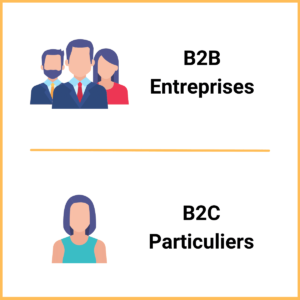
There are 2 main types of customer:
- Companies, in the case of b2b. This is a type of business relationship in which companies supply goods or services to other companies.
- Individuals, in the case of b2c customers. This is a type of commercial relationship in which companies supply goods or services to individuals.
We are all customers of certain companies, needing to buy products and services in order to live in our society. Think, for example, of the food we need to buy.
How do you attract customers?
1. Define your ideal customer
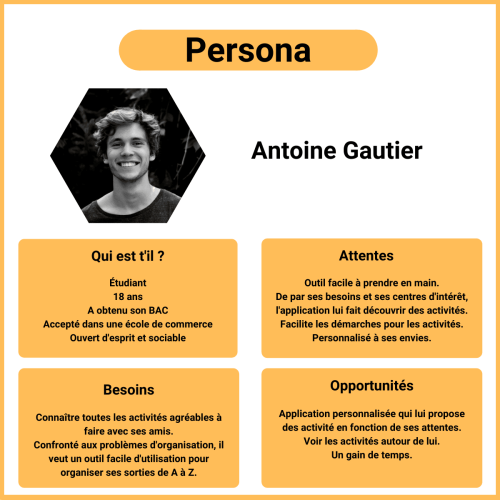
Each company can define the profile of its ideal customer (or customers, if there are several). We’ll call this profile buyer persona. It’s a fictitious person who would be the company’s ideal customer.To be as relevant as possible, this profile should be based on the company’s current customers. If you’re just starting out, you’ll certainly need to carry out more concrete research, such as market research, or ask questions to people corresponding to your potential target.
If you think everyone is your ideal customer, then your persona is no good. If you’re trying to please everyone, then you won’t win anyone over…
This information is then recorded in a sort of identity card, which can be more or less detailed, depending on your needs. However, it must remain simple and comprehensible to all, whether for sales teams or marketing.
Here is an example of a buyer persona sheet:
2. Where can I find my ideal customer?
It sounds obvious, but to find your ideal customer, you need to be in the places where your ideal customer is. This, of course, depends on the individual buyer persona.
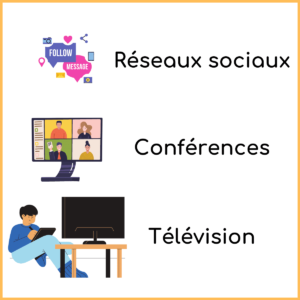
Can my ideal customer be found online, offline, in newspapers, on television, on social networks or in the street?
Online, look at forums and social media pages, including your own and those of similar or complementary businesses to find your future customers.
Offline, you can meet many potential customers at conferences and conventions in your sector.
Of course, you may have a large number of channels at your disposal for communicating with your target audience. Choose the most effective and relevant according to your objectives and budget.
3. Meet the needs of your ideal customer
Clearly identify the needs you meet.
Adding value and asserting yourself to your ideal customer as having a deep understanding of the problems they’re looking to solve.
The article you’re reading right now is an excellent example: it answers the questions you’re asking, and seeks to solve your problems.
Listen carefully to your prospects to find out whether your product or service meets their needs. It’s infinitely easier to sell a product that meets your target’s expectations, rather than one that’s “off the mark”.
Show them that you understand their pain, their desires, their obstacles, and that you’re THE ONE who can provide the real solution to their problems.
4. Offer promotions to ideal customers
Attract new customers to your business with introductory discounts or special offers.
This attracts new customers who were considering doing business with you, but needed an incentive to really change their buying habits.

This strategy is used, for example, by telephone operators who only offer discounts to new users and not to their loyal users. loyal users..
5. Sponsorship
Capitalize on your most loyal customers by offering to sponsor their friends, family or colleagues.
Even if some of them will do so naturally because you meet their needs, you need to put in place a communication and reward strategy that encourages them to recommend you.
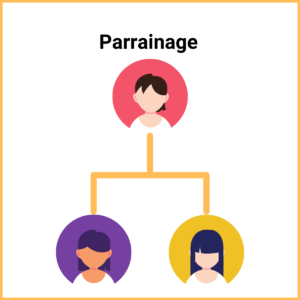
A new prospect from a sponsor is much more likely to buy and become a loyal customer too. The money saved because you didn’t have to go out and find the prospect, is given back to the customer who referred them, to build loyalty.
6. Create a website
Today, online searches are a new way for consumers to get information.
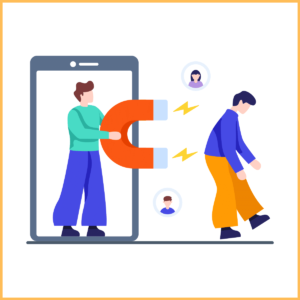
If you meet the expectations and problems of potential customers through articles or presentations of your products and services, they’ll be more likely to find you through an Internet search.
The more relevant and effective your answers are to users’ Internet searches, the more you’ll be promoted by search engines like Google. However, online competition is fierce. Don’t hesitate to call in the specialists to ensure you get results.
Who are my customers?
Not everyone is a customer of your company. A customer is a person or company who has already purchased a product or used your service. For example, for a roofing company, customers would be those who have already had a new roof installed for their home by the company.
Identifying customers is essential to enable the company to communicate more effectively with them. Using customer relationship management software is an excellent way to keep track of information about past customers.

It can be interesting to use the company’s current customers as a basis for finding new customers. Current customers will express what the product or service did for them and why they bought it. This information can help the company to better communicate with potential customers in the future.
How do you classify customers?
To classify your customers, we recommend setting up a customer segmentation. This means dividing up all your customers according to their characteristics. The company’s customers make up its customer portfolio, an enormous amount of information that needs to be well organized in order to find its way around.
This ranking will largely depend on the market in which the company operates. However, there are 6 essential criteria to be identified whatever the company’s sector of activity:
- First and last name
- Email address
- Phone number
- Current status (Is he or she a customer, prospect or lead?)
- Customer’s sector of activity (particularly interesting if the customer is a company)
- Interaction history
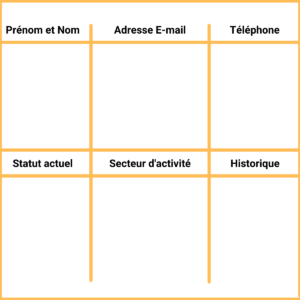
This is just the beginning of a good ranking. You can add as much information as you like. However, if the information you collect doesn’t affect the rest of your interaction with your customers, we recommend you stop.
Here is a non-exhaustive list to complete your ranking:
- Civility
- Age
- Location
- Contact preferences (e-mail, telephone…)
- Number of purchases
- Type of purchase
- Replies to e-mails
- Reminders and reminders
All this information is intended to support the company’s overall marketing strategy, and to help the company make better decisions with customers, so that they stay with us for as long as possible. It also enables us to see whether our teams’ efforts are paying off, by seeing whether the number of customers is increasing, for example.
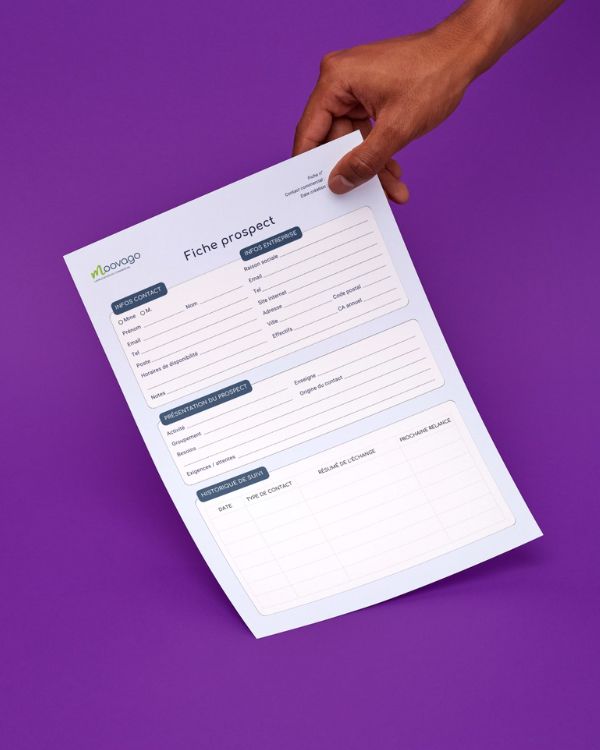
Keep a clear overview of all your customers
Our prospect sheet lets you record important information about each customer, their industry and your interactions.
Quickly find the essentials for personalized follow-up.
Why is the customer king?
You’ve probably heard it said that the customer is king. It’s a phrase that comes up a lot in shops and among salespeople.
These companies and their employees have understood thata satisfied customer is more likely to continue the business relationship and therefore buy more from the company.
So it’s vital for these companies to understand what’s holding customers and prospects backin the sales process, i.e. what’s not working for them and what’s blocking sales. If only one of them is reporting a problem they’ve encountered, then there may be a silent majority behind this brake. So ask yourself if you can confirm the presence of this problem, and try to resolve it to optimize your customer experience.
Be careful, however, not to take into consideration ALL requests from customers and prospects, as some of them run counter to the company’s product and identity.
Satisfaction is even more important today, as digital tools enable customers to find many more competitors.
This is a significant problem for SAAS companies, as they are dependent on their customers’ monthly or annual subscriptions. If customers cancel in large numbers, the company loses a lot of money. Everything must be done to avoid a high churn rate.
What are the differences between customer and consumer?
The customer is the person who will buy the products or services.
The consumer is the person who will consume or use the products and services purchased by the customer.
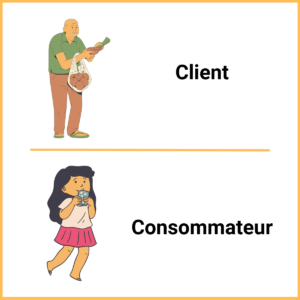
If, for example, a customer buys a car for personal use, he is both a customer and a consumer.
When a parent buys a toy for a child, the parent is the customer and the child is the consumer.
Customer synonym
The synonym for customer is consumer.
Customer in English
Client is translated as customer in English.